A Creator Strategy Should Survive the Next Platform Change
A resilient creator strategy prepares for platform volatility by investing in people, distinct communities, and ideas that can travel.
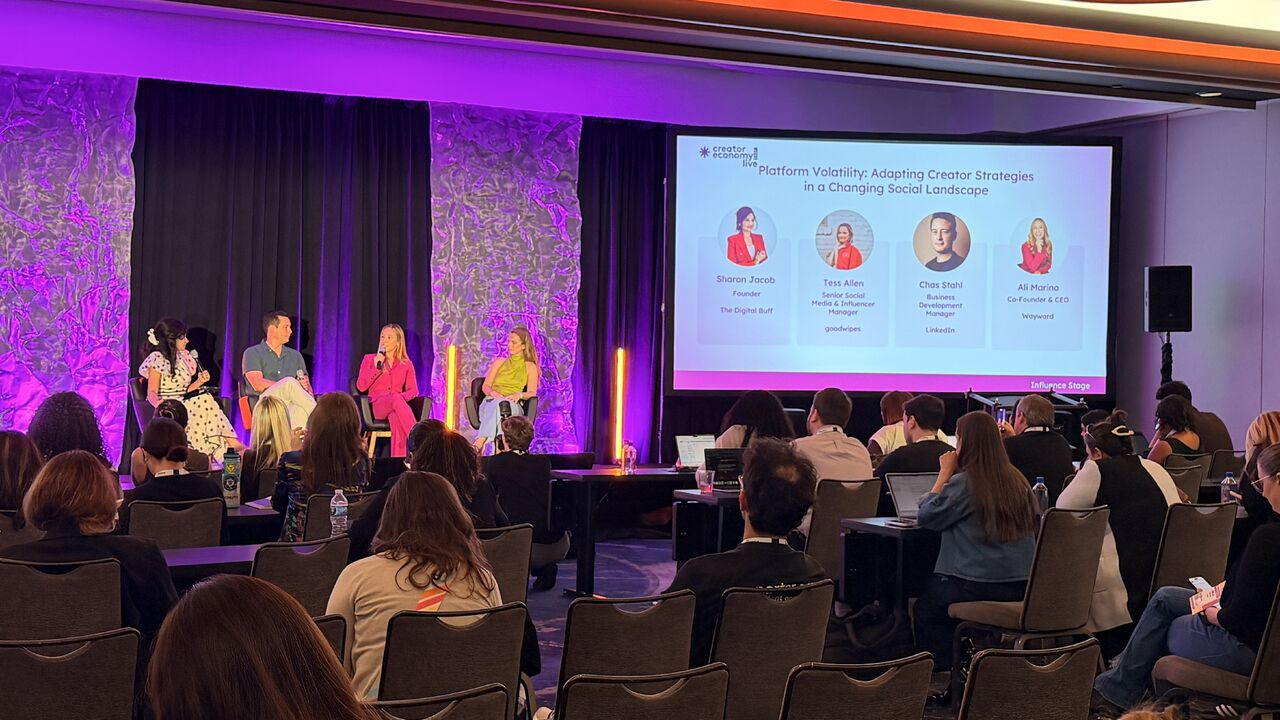
Platform volatility came up in a smart conversation I attended at Creator Economy Live East.
Social teams cannot control the next algorithm update, policy change, or shift in audience behavior. They can control whether their strategy is prepared for it.
That preparation is not about predicting every change. It is about building a creator program that still makes sense when a familiar platform stops behaving the way the team expected.
Know why each platform belongs in the strategy
A brand does not need to treat every platform as equally important.
Each one should have a reason to be in the mix. One may support discovery. Another may make deeper conversation possible. A third may be where a particular creator has built the strongest relationship with their community.
Those roles can change, but naming them gives the team something more useful than a list of active accounts. It creates a basis for deciding where to invest, what kind of work belongs there, and when a platform is no longer serving the strategy.
Without that clarity, platform expansion can become a reflex. A new feature launches, audience attention shifts, or another brand gets traction, and suddenly every team feels pressure to respond.
Not every change is an emergency. Not every trend needs a brand response, and not every platform deserves the same investment.
Let creators make content for their communities
The same idea should not look identical everywhere.
Creators understand the pacing, formats, references, and expectations of the communities they participate in. Giving them room to adapt an idea for those communities is more useful than asking them to reproduce one execution across every channel.
That does not mean the brand has to disappear. The product, message, and point of view should remain recognizable. But recognition does not require repetition.
A consistent strategy can produce different work because consistency comes from the reason the brand is present, not from forcing every creator into the same structure.
This is where creator selection matters. A brand that hires people for the communities and formats they already understand has more options when audience behavior shifts. It can listen to creators who are close to those changes instead of trying to manage every platform from a distance.
Decide what is signal and what is noise
Platform volatility can make every movement look urgent.
An algorithm update changes distribution. A format gets a burst of attention. A policy announcement creates uncertainty. Teams may feel pressure to revise the strategy before they know whether the change is temporary, meaningful, or even relevant to their audience.
A resilient program creates enough space to observe before reacting. The team can ask what actually changed, which audience behavior is affected, and whether the current work still supports the brand’s goal.
Sometimes the answer will require a real adjustment. Other times, the strongest decision is to keep making useful work and let the noise pass.
Restraint is part of strategy. It protects creator relationships and creative focus from being reorganized around every new signal from a platform.
Build the foundation around people and ideas
The strongest creator programs are built around people, relationships, and ideas.
Platforms are where those connections happen, but they should never be the entire foundation. A creator’s relationship with an audience can outlast a feature. A strong idea can be adapted to more than one format. A trusted partnership can keep producing useful work even when distribution changes.
That does not make platforms unimportant. Their products, policies, and incentives shape what creators can make and how audiences find it. The goal is to understand those conditions without confusing them for the strategy itself.
When the foundation is a relationship, the team can make a deliberate platform choice. When the platform is the foundation, every change can feel like the strategy is disappearing underneath it.
Thank you to Tess Allen, Sharon J., Chas Stahl, and Alexandra Decker Marino for bringing perspectives from different parts of the industry to the conversation. Hearing how each of you approaches change made the discussion especially useful.