The Opportunity Might Be Behind the Message You Haven’t Sent
Creators can find more opportunities through personalized outreach, specific asks, respectful follow-up, and generous professional relationships.
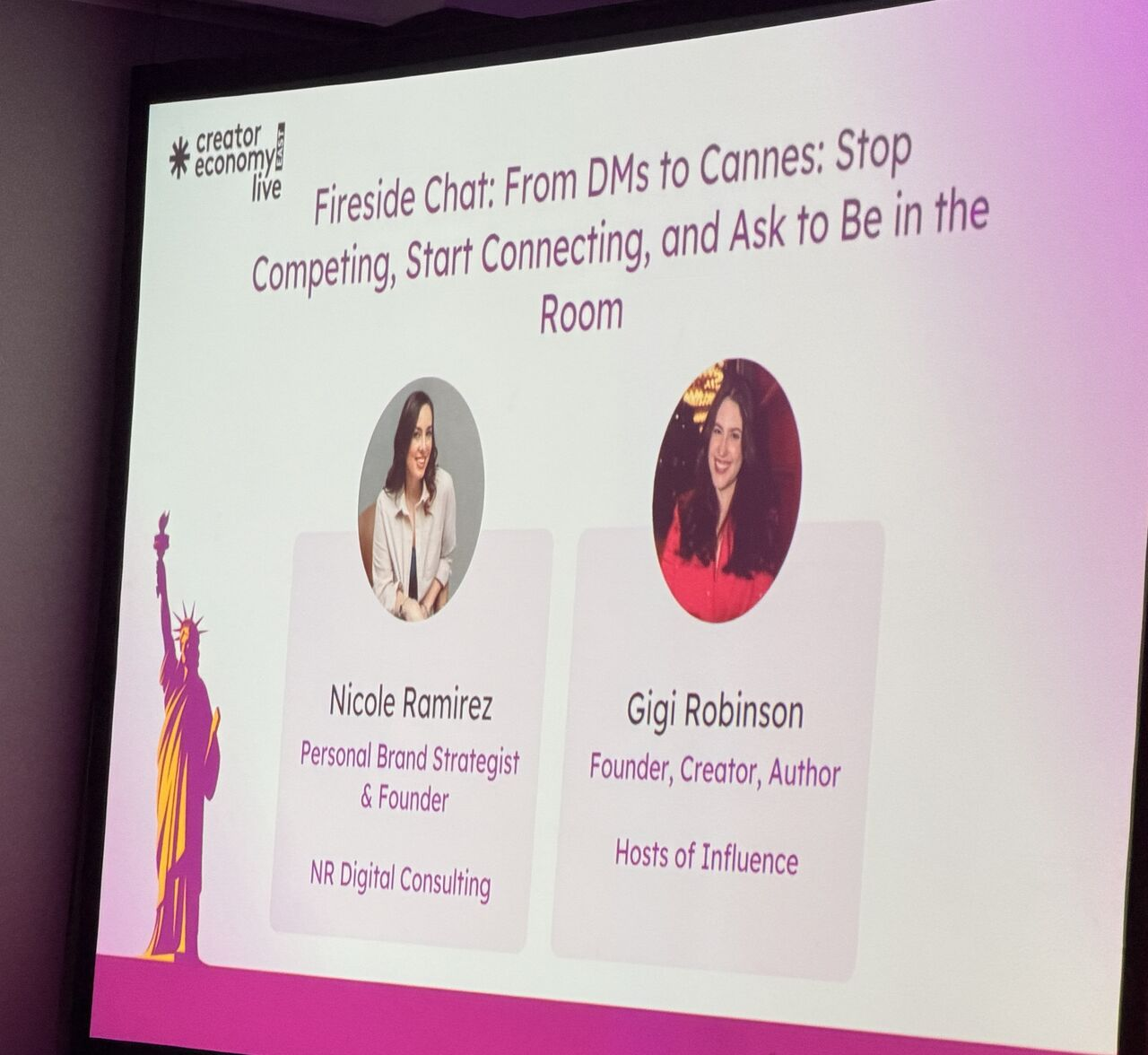
Everything you want might be behind pressing that send button.
Nicole Ramirez reached out to Gigi Robinson through a direct message. When Gigi did not respond right away, Nicole followed up.
That conversation eventually led to an interview on Nicole’s Claudecast, an Inc. article, an Adobe dinner at Cannes Lions, and a shared stage at Creator Economy Live East.
Their story is not a promise that one message will produce the same chain of opportunities. It is a useful reminder that a relationship has to begin somewhere, and sometimes the beginning is simply being willing to ask.
Personalize the message
A useful outreach message makes it clear why you chose that person.
Reference their work. Explain what caught your attention or why their experience connects to the conversation you want to have. Gigi recommended doing a small amount of research first, such as reading a journalist’s recent articles or reviewing the different ways a creator has already worked with a brand.
Personalization does not require a long introduction. It requires enough specificity to show that the message was meant for them.
That matters because creators, editors, brand leaders, and other people working in public receive a lot of vague requests. “I would love to connect” places the work of figuring out the purpose on the recipient.
A stronger message gives them a reason to understand the connection.
Make a specific ask
The person receiving the message should know what you are inviting them to do.
That might be a podcast interview, a short conversation, an introduction, a collaboration, or an opportunity to review an idea. A specific ask lets the other person evaluate the request without guessing about the time, context, or expectation behind it.
Specific does not mean demanding. The ask can be clear while leaving room for someone to say no, suggest another option, or respond when their schedule allows.
Clarity respects both sides of the conversation.
Follow up without treating silence as rejection
Nicole followed up when the first message did not receive an immediate response.
People miss messages. They read something while moving between tasks, intend to return to it, and lose it beneath newer conversations. One respectful follow-up can bring a relevant request back into view.
There is a difference between following up and creating pressure. A useful follow-up is brief, acknowledges that the person may be busy, and makes the original request easy to find. It does not assume that attention is owed.
The goal is to give the conversation another chance, not to punish someone for missing the first one.
Make the work before the dream opportunity arrives
If you want to pitch a particular kind of brand partnership, create examples of that work before the brand hires you.
That does not mean producing a free campaign disguised as a pitch. It means showing that you understand the format, category, audience question, or creative problem you want to be trusted with.
An example gives the recipient something more concrete than ambition. They can see how you tell a story, what you notice, and where their brand might fit into work you already know how to make.
The same principle applies beyond brand partnerships. A creator who wants to host interviews can begin interviewing people. Someone who wants speaking opportunities can develop the idea they want to speak about. The work makes the ask easier to understand.
Ask people how they found their opportunities
Other creators can be sources of context, not only competition.
Ask how they found a speaking opportunity, met a collaborator, approached a publication, or built a relationship with a brand. They may not be able to share every detail, but their experience can reveal a path you did not know existed.
The person working in your space may eventually become a collaborator, connector, or friend. That becomes more likely when the relationship is built around curiosity and generosity instead of comparison.
Make introductions when you can. Share an opportunity that fits someone else. Help without treating every gesture as a debt that must be repaid.
Someone with 400 followers may make the introduction that changes your career. Reach is not the only form of influence, and the most useful person in a network is not always the most visible one.
Apply before you feel completely qualified
Waiting to feel fully ready can become a way of avoiding the possibility of being told no.
The session also made an important distinction between “no” and “not now.” A journalist, brand, or event may not have the right opportunity today and still remember a thoughtful pitch when something relevant opens later.
You do not need to ignore the requirements or pretend to have experience you do not have. You can look honestly at what the opportunity needs, recognize where your work already connects, and make the case for yourself before every doubt disappears.
The application, pitch, or message is not a declaration that you deserve the outcome. It is an invitation for someone else to consider what you could bring to it.
Thank you, Gigi Robinson and Nicole Ramirez, for an honest conversation about asking for opportunities and helping others find them too.
Now, who have you been meaning to message?
Knowing what you bring makes it easier to ask for the right opportunity.