AI’s Best Role in the Creator Economy Is Behind the Scenes
AI can make a creator business more sustainable by organizing leads, improving follow-up, and automating routine administrative work.
AI’s most valuable role in the creator economy may have nothing to do with creating content.
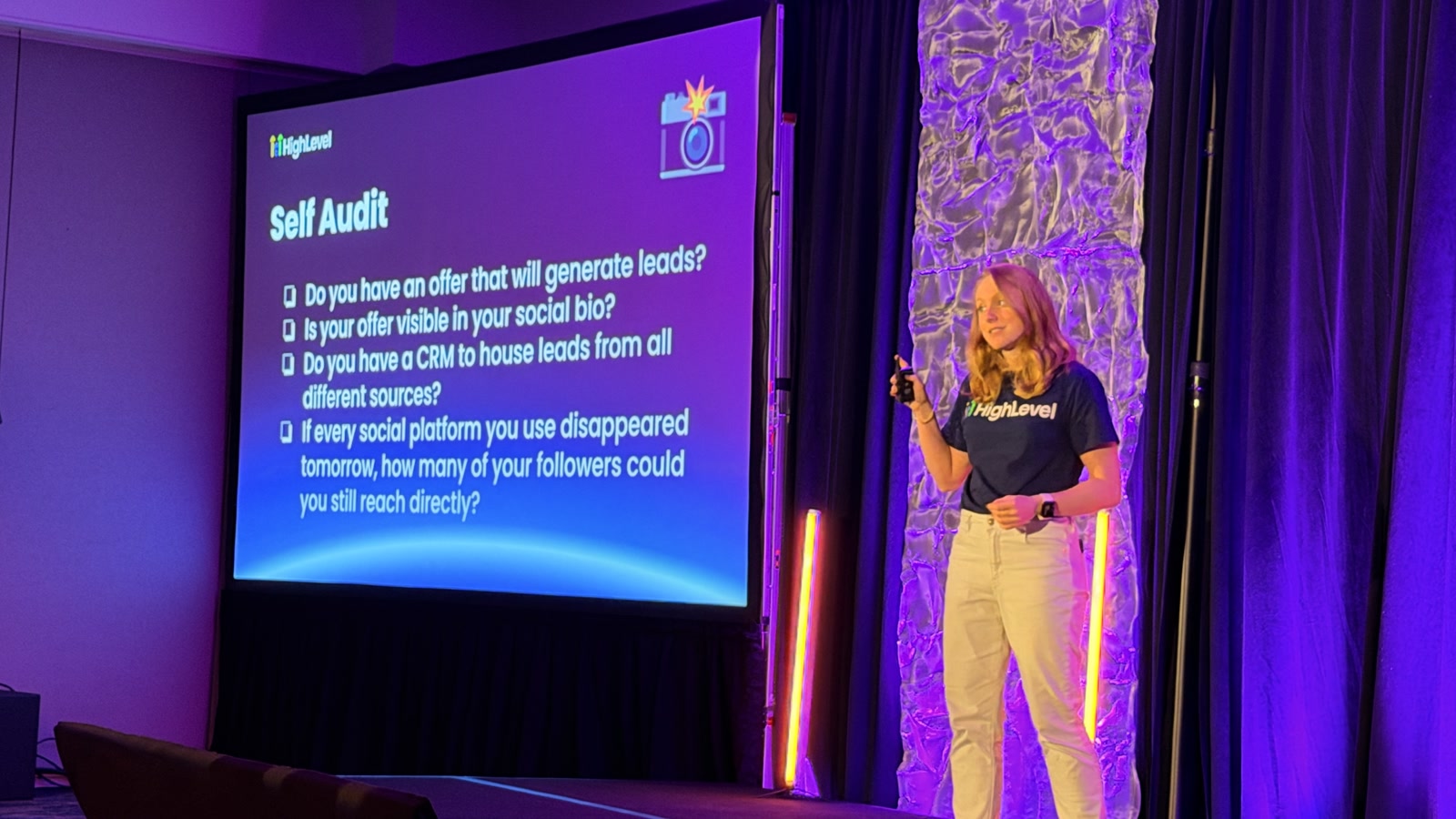
During Emma Jackson’s session at Creator Economy Live East, she shared how creators are using AI to run the business behind their content. Emma is Senior Manager of Product Marketing at HighLevel, and many of her examples demonstrated that company’s business-automation platform. The underlying workflow questions apply regardless of which tools a creator chooses.
That distinction matters. The public conversation about AI and creators often concentrates on what a tool can generate. Creators also spend an enormous amount of time on work the audience never sees: sorting inquiries, following up with leads, answering familiar questions, sending invoices, and trying to remember which conversation needs attention next.
AI can be useful when it makes those systems more reliable without trying to replace the ideas, relationships, or judgment at the center of the work.
Creator work includes running a business
Publishing is only one part of a creator’s job.
A brand inquiry may begin in an email or direct message. A customer question might arrive while the creator is filming, traveling, or asleep. A promising opportunity can disappear beneath dozens of newer messages. An invoice that takes five minutes to prepare still becomes a problem when it is one of twenty small administrative tasks competing for attention.
Emma’s examples showed creators using AI and automation to:
- Organize brand inquiries, leads, and customer conversations
- Follow up on opportunities before they get buried
- Respond to common questions while they are offline
- Build direct connections through email and text
- Reengage existing followers instead of constantly chasing new ones
- Collect testimonials and social proof
- Automate invoices, reminders, and repetitive administrative work
None of those tasks is the creative idea. Together, they shape whether a creator can turn attention into a sustainable business.
Better follow-up protects opportunities
The goal is not to respond to every message with an artificial conversation. It is to make sure a real opportunity does not vanish because the creator was busy doing the work people hired them to do.
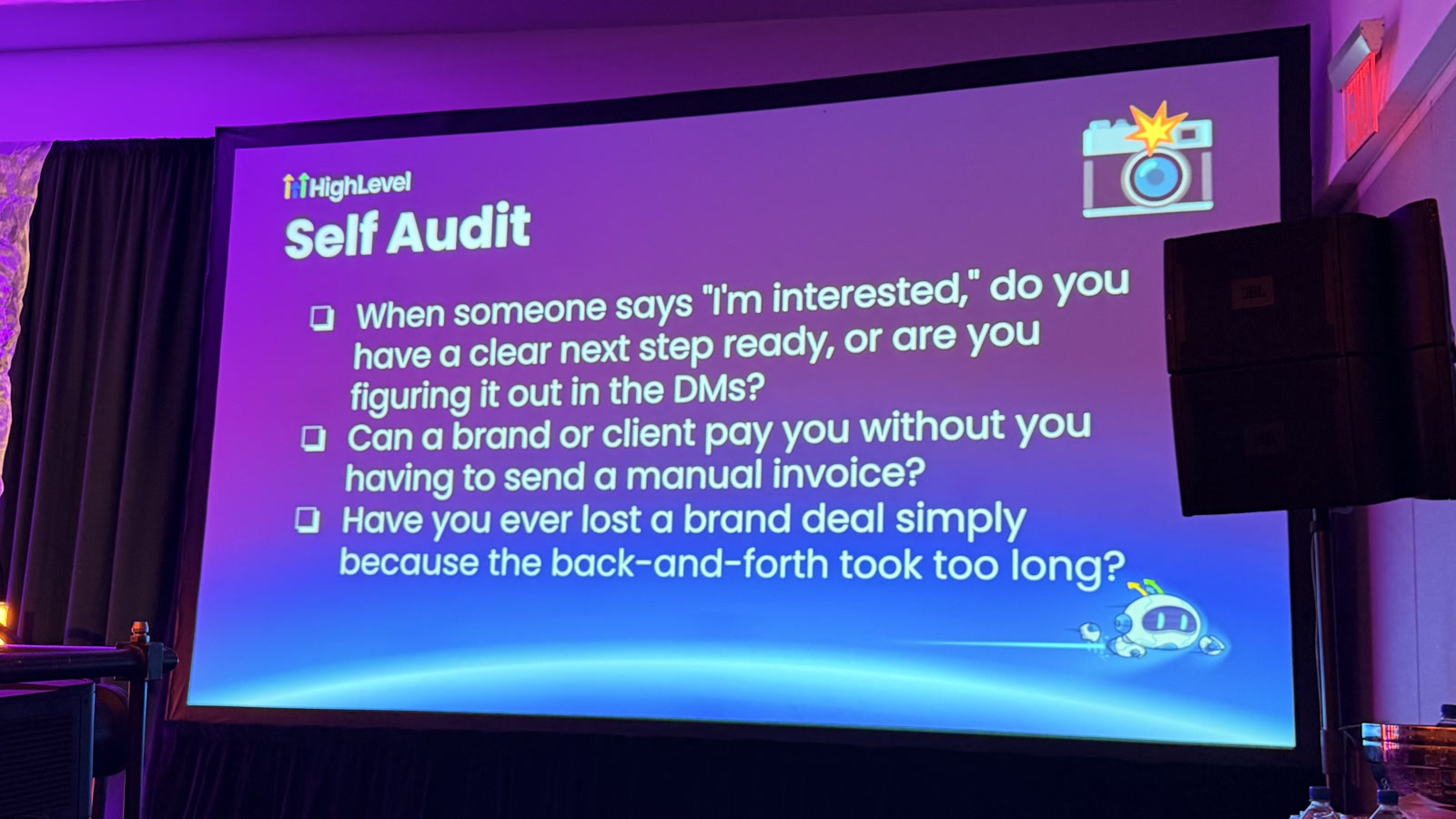
A system can identify a new inquiry, keep the relevant information together, suggest or send an appropriate first response, and remind the creator when a human decision is needed. It can also give someone a clear next step instead of leaving the entire process inside a crowded inbox.
Emma demonstrated how inquiries from direct messages, email, forms, and events can enter one customer relationship system. That shared history matters because people rarely stay inside one channel from beginning to end. They might discover a creator on social media, complete a form on the creator’s site, and reply later by email.
That makes follow-up less dependent on memory. The creator still decides whether an opportunity fits, how to price the work, and what the relationship requires. Emma also emphasized that an automated conversation can be handed to a person when the subject or decision needs human attention. Automation helps bring the decision to the right place at the right time.
Direct relationships matter more than constant reach
Creators often spend more energy looking for the next follower than reconnecting with people who have already shown interest.
Email and text give creators ways to maintain direct relationships outside a social feed. AI can help organize those contacts, recognize useful follow-up moments, and support recurring communication. The value is not sending more messages. It is making the existing relationship easier to continue.
That can include answering common questions, inviting someone back to a relevant offer, or checking in after a previous interaction. It can also help a creator distinguish between starting a conversation and repeatedly pitching the same audience.
These systems should remain thoughtful. A direct channel is valuable because someone chose to be there. Automation should protect that trust through clear consent, useful messages, and an easy way to leave, not treat access to a phone number or inbox as permission for unlimited contact.
Social proof is part of the workflow
A good experience can end without becoming visible proof.
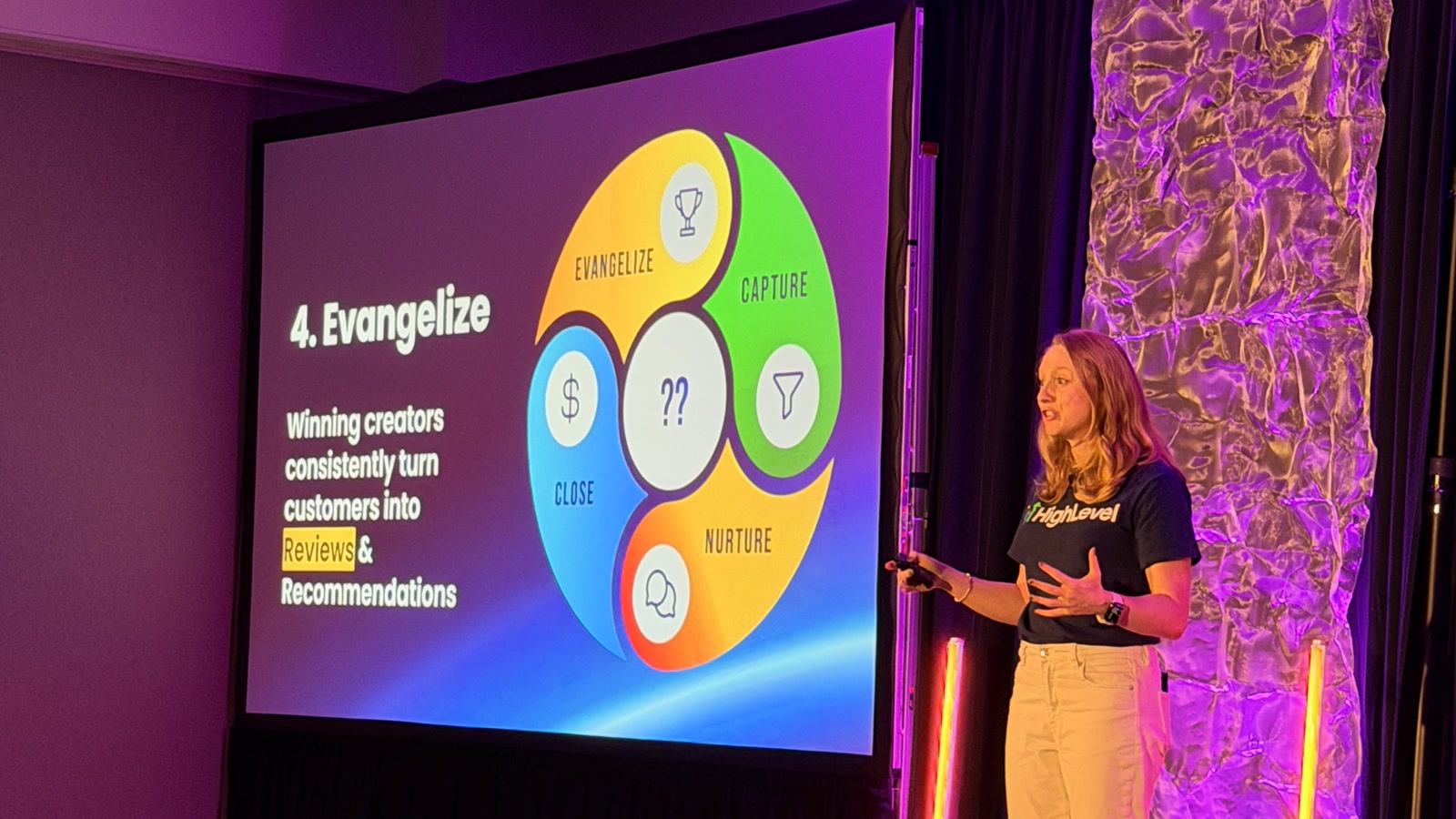
Creators may receive praise in a reply, direct message, or brand conversation and never build a reliable process for collecting it. Emma showed how a business system can ask for a review or recommendation at an appropriate point instead of hoping the creator remembers later.
That matters because testimonials help future partners and customers understand what the creator delivers beyond audience size. The system can make the request consistent, but the response remains valuable because it comes from a real person describing a real experience.
Start with one repeated task
The most practical advice from the session was to start with a single workflow.
Find a task you repeat regularly. Map what starts it, which information it needs, where human judgment belongs, and what a successful next step looks like. Build a small system around that task, test it, and expand only after it works.
That is more useful than trying to automate the entire business at once. A creator can learn where the system saves time, where it creates confusion, and which moments should always remain personal.
Used well, AI takes routine work off a creator’s plate. It leaves more time for ideas, relationships, and decisions that require human judgment.
That may be less visible than generating a video, but it could be much more important to whether the creator can keep making one.
Thank you, Emma Jackson, for sharing a practical look at how AI can support a more sustainable creator business.
Creators build more durable businesses when they develop assets beyond a platform audience.