I'm not an individual after all
I’m obsessed with this one scientific fact: my body is an ecosystem. It makes being an ‘individual’ feel a lot less obvious.
This started with fiber and ended with a much stranger realization
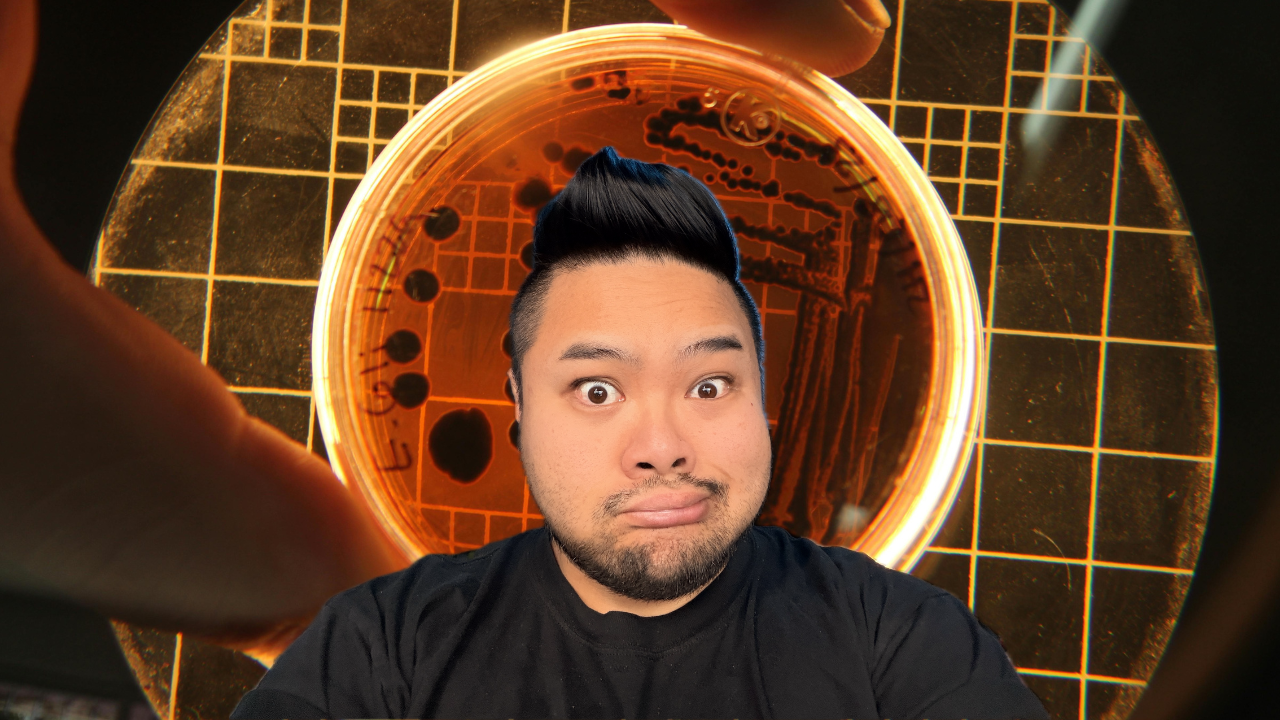
I’m obsessed with this one scientific fact and I can’t stop thinking about it.
A human body is not working alone. It is a dense, living city where human cells and microorganisms eat, signal, negotiate and survive together.
And suddenly, the idea of being an individual starts to feel less obvious.
We aren’t self sufficient. Microorganisms participate in digestion, immune function and the chemical signaling that connects the gut with the rest of the body.
They include bacteria, fungi and other microscopic life adapted to living with us.
The more I go down the fiber and microbiome rabbit hole, the less I can climb back out. The deeper I go, the less convincing it feels to draw a clean line around what counts as “me.”
I’m a colony pretending to be an individual.
That realization kept pulling me back to an Octavia Butler short story I read years ago. Her aliens weren’t singular beings. They were collective organisms living in symbiosis. When I first read it, it felt so sci-fi. Now it feels real.
Our gut and brain communicate through what researchers call the gut-brain axis.
That communication is real, but it is more complicated than the internet version of “your gut controls your mood.” Neural, immune, endocrine and metabolic pathways all participate, and researchers are still working out what those relationships mean for human health. A scientific review of the brain-gut-microbiome axis describes that communication as bidirectional rather than a single command traveling from the gut to the brain.
Most of the body’s serotonin is produced or stored in the gastrointestinal system, where it helps regulate functions such as intestinal movement and secretion. That does not mean gut serotonin simply travels into the brain and becomes happiness. Current research on microbial and serotonin systems notes that gut-derived serotonin does not cross the blood-brain barrier. The possible relationships among microbes, medications, inflammation and mental health are active areas of research, not a settled instruction manual for changing a mood.
That uncertainty is actually more interesting to me. My body is in constant conversation with a community I cannot consciously direct.
“I” am a collaboration.
The human provides one kind of structure. Bones. Organs. The hardware. The changing microbial communities participate in how the whole system operates. Not exactly software, but close enough for the metaphor that broke my brain open.
It freaks me out, but also comforts me more than it should.
This does not mean I can feed my microbiome one perfect ingredient and program a new personality. It gives me a different way to think about care. I can tend the environment without pretending I control every outcome.
Microbial communities can change with diet, medication, illness, location and many other conditions. The response is individual, and “different” does not automatically mean healthier.
Change really does come from the inside. I’m adjusting conditions and paying attention to what happens, not declaring that I have found a universal reset button.
Here’s what that looks like in my practice:
- Fiber. I’m eating more beans, vegetables, whole grains and other fiber-rich foods. I’m not tracking every gram or treating one supplement as a shortcut. I’m making fiber-forward choices at most meals and letting consistency be enough for me.
- Diversity. The American Gut Project found differences between participants who reported eating fewer than 10 and more than 30 kinds of plants per week. It was an observational, self-selected citizen-science cohort, not proof that 30 is a magic threshold or that one microbial profile defines the healthiest person. I still find variety a useful and joyful practice. Garlic counts. Onions count. Herbs count. So does tea.
- Fermentation. I’m experimenting with natto, kimchi and whatever else I can tolerate without turning food into a chore. A small randomized study of fiber-rich and fermented-food diets found different immune and microbiome responses in its two groups. That is interesting evidence, not a promise that fermented food will produce the same result for everyone.
This is my personal food practice, not medical or nutritional advice. The research gives me better questions. It does not give me permission to diagnose anyone, including myself, through a grocery list.
I’m early in this, but I haven’t felt this energized in a long time.
I’m about four months into what I jokingly call side fiber psychosis. I’m obsessed. I want to tell everyone I know. Sorry to my friends and strangers I corner at parties.
What I like most is how the story in my head keeps changing.
I’m not a failed person that needs fixing. I’m a habitat.
If I feed it with care, protect it and stop treating every fluctuation like a personal failure, I give myself better conditions to work with.
I don’t have to become someone new.
I can stop treating every signal from my body like sabotage.
Cravings, moods and energy shifts have more than one cause. I do not need one tidy microbiome explanation to recognize that my body responds to its environment.
I am a garden.
For a long time, I thought growth meant deleting parts of myself. Cutting things out. Shrinking down to something more manageable.
Instead of self-deletion, I need to focus on self-cultivation.
Because the life I was trying so hard to fix was already trying to grow.