I don't want to get married, and here's why
Marriage doesn’t make sense to me anymore. I still believe in love and commitment. I’m questioning the contract and the convention around them.
Marriage doesn’t make sense to me anymore.
It gets framed as the greatest gesture of love, but it is also a serious legal status with consequences that outlast the ceremony.
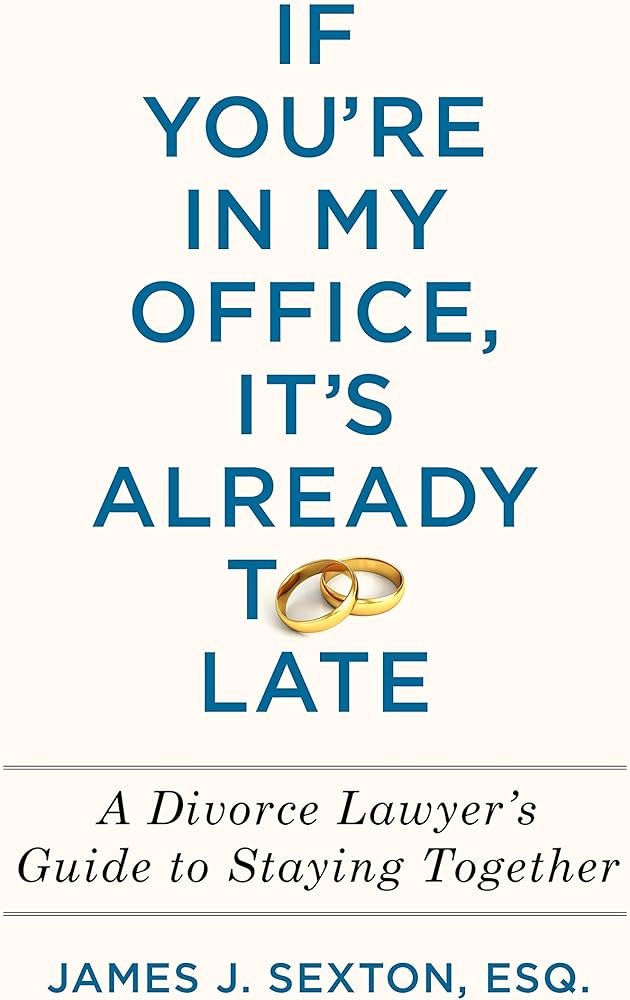
I read this book, If You’re in My Office, Then It’s Too Late by James J. Sexton. He’s a divorce lawyer, and the book laid out things I already felt but couldn’t put into words. It pushed me to look at marriage without the romance filter on.
People keep saying there are tax advantages. I still don’t know what all of them would mean for my actual life, so I looked more carefully at the federal rules.
Marriage changes which filing statuses are available. The IRS explains that filing status can affect tax owed, credits, the standard deduction and whether a return is required. Married couples may file jointly or separately, depending on their circumstances. A joint return may produce a lower combined tax or unlock benefits that do not apply to separate returns, but it is not an automatic prize for every couple.
It also creates shared responsibility for that return. IRS Publication 501 says spouses who file jointly generally report combined income and deductions and may both be responsible for tax, interest and penalties connected to the return. Filing separately can keep tax responsibility separate in some circumstances, but it can also change deductions and credits. Double-edged sword.
Which leaves me with the same question I keep circling back to:
What can I not do single that I can only do married?
And the honest answer is more complicated than I wanted it to be.
Keep in mind, I don’t want kids, nor do I have dependents so this opinion is formed based on that.
Some practical needs can be addressed separately through documents such as medical directives, powers of attorney, a will or a financial agreement. But those documents do not automatically reproduce every federal and state right, responsibility, protection or default that comes with marriage. The details depend on where you live, what you own, how you earn money, whether anyone depends on you and what happens when one person becomes ill or dies.
That makes me more interested in understanding the structure, not less. Anyone making these decisions should get individual legal and tax advice rather than treating my questions as a substitute for it.
The book made another idea clear to me: choosing not to write an agreement does not mean entering marriage without rules. It means accepting the defaults that apply where you live. People say they do not want a prenup because it feels like planning for failure. I hear that. I also want to know what I am agreeing to before love and law get bundled together.
If I’m marrying someone, I’m marrying who they are now and whoever they might become in ten or twenty or thirty plus years. The same goes for me. I might change. I might fall apart. I might end up in a situation that hurts both of us. I’d want to protect the person I love from the fallout of my worst moments. And I’d want the same back.
When you strip the romance off marriage, the legal structure is still there. If marriage ever happens for me, I would need to understand the consequences that apply to us before stepping into it. I would need my partner to care about that too.
I know this reads cold to some people. I know the nuance here isn’t common. I’ve had moments where I wondered if something’s wrong with me because I look at marriage this way. But then I remember I’m not trying to attract people who’d be bothered by the fact that I think things through. I have to be okay with that.
I’m willing to change my mind someday. I’m open to the idea that the right person could shift the whole picture. Marriage is a powerful cultural technology. The author of that book still loves marriage despite being a divorce lawyer. I remain more moved by the cultural meaning than by a generic list of contractual advantages.
I’m also suspicious of the pedigree of marriage and how it historically benefited only specific groups of people, but we’re not ready for that conversation. People might think I’m the least romantic person ever, but this is where I am.
If it lowers my chances of marriage, then so be it. I’d rather be clear about who I am than walk into something this serious pretending I’m someone else.